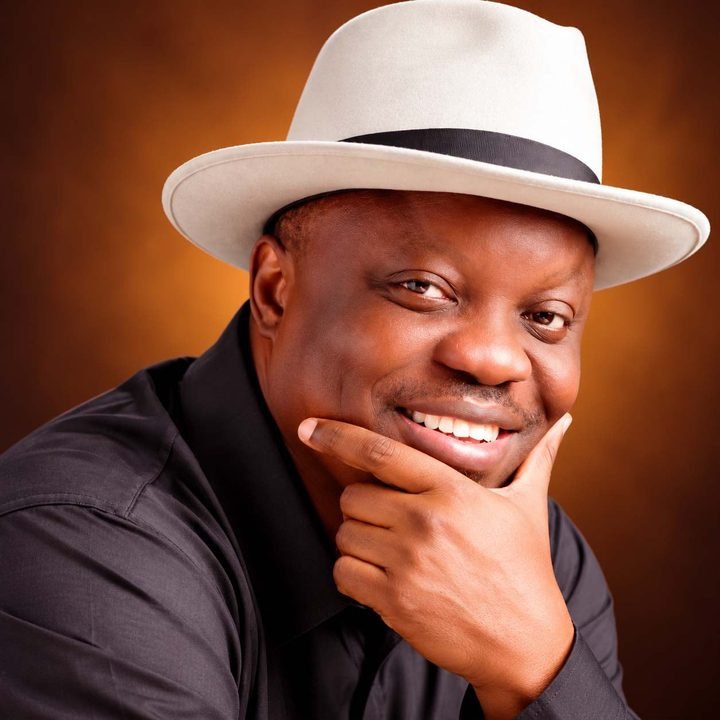
We remember the little boy from Abigborodo who grew up in Mosogar. The young man who went to medical school and became a physician. The public servant who rose through the responsibilities of government. The Governor who sought to build a more peaceful, prosperous Delta State.
And above all, we remember Emmanuel Eweta Uduaghan, the man.
A life of many callings
Seventy-one years that ran from the creeks and farms of the western Niger Delta to the operating theatre, the State Executive Council and Government House, Asaba.
1954
Born on 22 October in Abigborodo, Warri North, to Chief Edmund D. Uduaghan and Mrs Cecilia Uduaghan.
1956
Goes to live with his paternal grandmother in Mosogar, where he grows up farming, fishing and speaking Urhobo.
1961
Begins at Baptist Primary School, Mosogar, a year after first being turned away.
1968
Enters Federal Government College, Warri.
1975
Admitted to the University of Benin to study medicine; graduates MBBS in 1980.
1981
Named Most Outstanding NYSC Doctor in Kwara State while serving in Oro.
1983
Joins Delta Steel Company as a medical officer, later practising in anaesthesia.
1988
Marries Roli Nere Tuoyo on 20 February.
1994
Establishes his private practice, Abode Clinic.
1999
Appointed Commissioner for Health, Delta State, on 6 August.
2003
Appointed Secretary to the Delta State Government on 6 June.
2007
Sworn in as Executive Governor of Delta State on 29 May.
2011
Returns to office after the January rerun and wins re-election in April.
2015
Hands over to Dr. Ifeanyi Okowa on 29 May after eight years as governor.
2026
Passes away on Monday, 19 October, three days before his 72nd birthday.
I
Abigborodo and Mosogar 1954–1974
Emmanuel Eweta Uduaghan was born on 22 October 1954 in Abigborodo, in what is now Warri North, the son of Chief Edmund D. Uduaghan, The Alema of Warri Kingdom, and Mrs Cecilia Uduaghan. His father was Itsekiri; his mother’s people were Esan, from Ubiaja.
At about two years old, while his mother faced recurring ill health, he went to live with his paternal grandmother in Mosogar. There he grew up in Urhobo country and learned the language he would speak fluently all his life. He farmed, fished, and rose early to work the rubber plantations before school, in a community without electricity, piped water or a hospital.
He failed his first attempt to enter primary school. In the custom of the time, a child had to reach one arm over his head and touch the opposite ear; he could not, and was sent home. He recalled it with emotion for the rest of his life. He returned the following year and studied at Baptist Primary School, Mosogar, from 1961 to 1966, then at Federal Government College, Warri, from 1968 to 1974.
Born under colonial rule, he was six when Nigeria became independent, and came of age through the country’s early years, its military governments and the Civil War. The rural Niger Delta of his boyhood, rich in resources yet short of roads, power and clinics, shaped the priorities he would later carry into government.
II
The physician 1975–1999
He wanted to be an accountant. His father, a retired police inspector, urged him toward medicine instead, and the young Emmanuel took his father’s advice. In 1975 he entered the University of Benin, and in 1980 he graduated with the MBBS.
During his National Youth Service in 1981–82 he worked at a community hospital and mobile clinic in Oro, Kwara State, and was named the Most Outstanding NYSC Doctor in the state. He went on to train in anaesthesia, a discipline that asks for precision, calm under pressure and constant watchfulness. Those who knew him saw the same qualities in the way he met every day.
In 1983 he joined Delta Steel Company as a medical officer. His career took him through Westend Hospital, Warri; Benoni Hospitals, Benin City; and Shell Hospital, Ogunu. In 1994 he founded his own practice, Abode Clinic. He was active in the Nigerian Medical Association in Warri and in Junior Chamber International, and outside medicine he was a keen tennis player, swimmer and snooker player who collected his share of cups and trophies.
Medicine was never a mere prelude to politics. It was a substantial part of his adult life, and it is how many Nigerians first knew him: the doctor who became governor.
III
Into public service 1999–2007
On 6 August 1999, weeks after Nigeria’s return to civilian rule, he was appointed Delta State Commissioner for Health. For the first time he was responsible not for one patient at a time but for the health of an entire state.
His tenure is remembered for efforts to improve the pay of medical personnel and to upgrade the state’s health facilities, work informed by his own years inside the system.
On 6 June 2003 he became Secretary to the State Government, placing him at the centre of the state’s executive machinery: coordinating ministries and agencies, carrying decisions of the governor and the Executive Council into action, and learning every side of government, from finance and infrastructure to agriculture and security. By 2007 he had served eight years in the senior ranks of Delta State Government.
IV
Governor of Delta State 2007–2015
On 29 May 2007 he was sworn in as Executive Governor of Delta State, one of Nigeria’s most economically important and most complex states. He organised his government around a Three-Point Agenda: peace and security, human capital development, and infrastructure.
His election was challenged in court. In November 2010 the Court of Appeal ordered a rerun; he returned to office after the January 2011 poll and won a further term in April 2011.
His defining idea was Delta Beyond Oil. Oil prices rose and fell, petroleum was finite, and pollution was eroding the farming and fishing that communities had lived by for generations. He argued that the state’s lasting wealth would come from its people: its farmers, traders, artisans and young entrepreneurs. Unemployment and lost livelihoods, he believed, fed frustration and conflict, so prosperity and peace had to be built together.
On 17 December 2007 he launched the Delta State Micro-Credit Programme, lending to cooperative clusters of small businesses that banks would not serve. By 2014 it had supported 111,312 people in 10,429 groups, 67,861 of them women. His government supplied tractors to farmers, pursued fish-feed and cassava-processing mills, and in May 2015 commissioned the Micro, Small and Medium Entrepreneurship Centre at Issele-Uku with UNIDO, built to train about 4,000 young people a year in leatherwork and other trades.
In May 2015, receiving the Silverbird Man of the Year award, he said he hoped peace would be his legacy, and dedicated the honour to his wife and the people of Delta State. He handed over to Dr. Ifeanyi Okowa on 29 May 2015, after some sixteen consecutive years in senior public office. He was a Commander of the Order of the Niger.
V
Health for all Deltans
A doctor in Government House, he made healthcare a pillar of his administration. On 20 November 2007, months into office, he launched Free Maternal Healthcare, at a time when about 800 women died for every 100,000 births.
The programme covered antenatal care, childbirth, caesarean sections and emergencies across almost every state hospital. By June 2010 it had recorded 132,107 antenatal bookings and 59,684 deliveries. On Children’s Day 2010, at Central Hospital, Sapele, he extended free medical and surgical care to every child under five.
He revived the Rural Health Scheme, sending teams of doctors, nurses, optometrists and pharmacists to 265 riverine and rural communities in two years, where they saw 54,420 patients and performed 2,796 operations, including 1,681 eye surgeries.
Functional hospitals in the state reached 53. With the commissioning of General Hospital, Isiokolo, in May 2010, every local government headquarters had a general hospital. His administration completed the Delta State University Teaching Hospital, Oghara, built emergency units in Agbor and Warri and a dialysis centre in Warri, upgraded schools of nursing and midwifery, and looked after the welfare and training of health workers.
VI
Schools, roads and waterways
He saw welfare as one unbroken line, from a mother’s antenatal care, through childhood, to a university place. Public primary and secondary schooling became free, with WAEC and NECO fees paid by the state.
His government built and renovated more than 1,300 classrooms between 2009 and 2011, commissioned 67 model schools and recruited over 5,000 teachers, with allowances for those who lived in rural and riverine postings. The EDUMARSHAL scheme brought out-of-school children back to class. A ₦5 million postgraduate scholarship rewarded first-class graduates, and bursaries reached law students, aviation trainees, students with disabilities and the children of deceased civil servants.
On the roads, the Urban Mass Transit Scheme put more than 1,000 buses and taxis into service at subsidised fares. For the riverine communities he knew from childhood, he built 31 concrete jetties and bought 130 passenger boats. Asaba International Airport opened to commercial flights in July 2011, and the Effurun and Asaba flyovers were commissioned in April 2015, among many roads and bridges across the state.
VII
Into the creeks
His years in office came at a time of militancy, kidnapping and attacks on oil installations. He believed in dialogue, and more than once he went into the creeks himself to hold it.
One Sunday morning, as he dressed for church, he was told that young men in an Itsekiri community near Escravos were preparing to bomb a Chevron platform. He sent his family to church and flew to Escravos. The young men would meet him only if he came unarmed, so he crossed by boat with his aide-de-camp, his orderly and one assistant, none of them carrying a weapon, and walked two kilometres through swamp and bush to see the community head while gunshots sounded around him.
He sat for three hours with about twenty armed young men, heard their grievance that the community would see nothing from the multibillion-dollar Escravos Gas-to-Liquids project, and persuaded them that violence would help no one. On the way back, a military boat stopped his party at gunpoint until a senior officer recognised him.
The platform was not attacked. He brought Chevron and the community to the table, and the agreement that followed gave many young people jobs and contracts on the project.
I had already taken an oath, and I had a strong belief that I would come back.
He also believed football could bring together people divided by ethnicity, religion or politics, and his government opened public viewing centres across the state as places for communities to gather.
VIII
The man at home
On 20 February 1988 he married Roli Nere Tuoyo, daughter of Brigadier-General Sunny E. Tuoyo. Together they raised two children, Orode Meyiwa and Toritseju, and he lived to know his grandchildren, Makayla and David Okpu.
He belonged to a large and close family of brothers, sisters, cousins, aunts, uncles, nephews and nieces, whose members have served in business, government, medicine, finance and industry across Nigeria and abroad. Beyond its achievements, the family’s greatest strength lay in the bonds between its members, and that foundation shaped his understanding of loyalty, leadership and service.
IX
Farewell 2026
His Excellency, Dr. Emmanuel Eweta Uduaghan, CON, passed away on Monday, 19 October 2026, at the age of 71, three days before his 72nd birthday.
For Delta State, his death marked the passing of an important figure in its history. For the communities he served, the loss of a leader whose name had become part of their shared experience. For his colleagues in medicine, the loss of a physician who carried the discipline of his profession into government. And for his family, the loss of a beloved husband, father, grandfather, brother, uncle and patriarch, whose presence no public honour could replace.
A life does not lose its meaning when its earthly years end. It continues in the people it touched, the values it passed on, the institutions it helped to build and the memories it leaves behind.
A life lived. A journey completed. A legacy remembered.
What he left in Delta State
Figures from the records of his administration, 2007 to 2015.
59,684
babies delivered free of charge under the Free Maternal Healthcare Programme, Nov 2007 to Jun 2010
265
communities across all 25 local government areas reached by the Rural Health Scheme, 2008 to 2010
111,312
Deltans supported by the Micro-Credit Programme, 67,861 of them women